
Microneedling
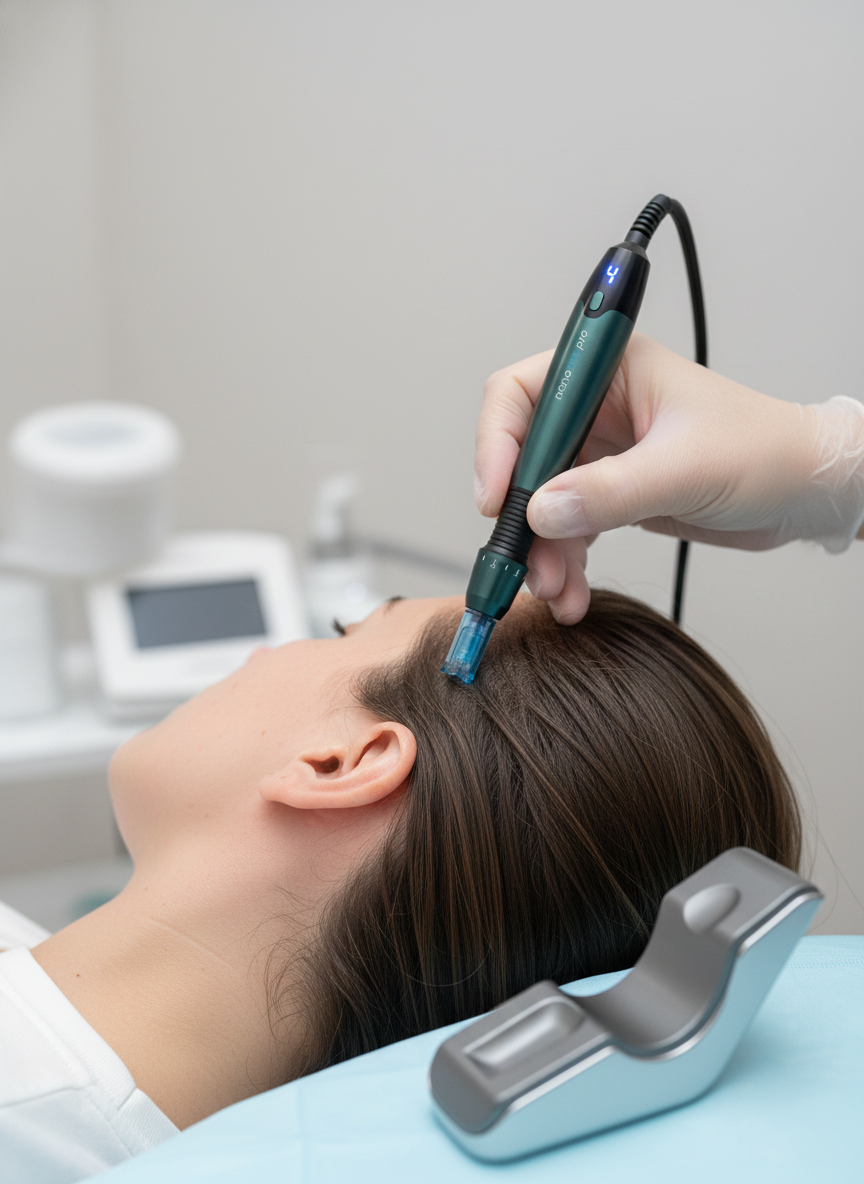
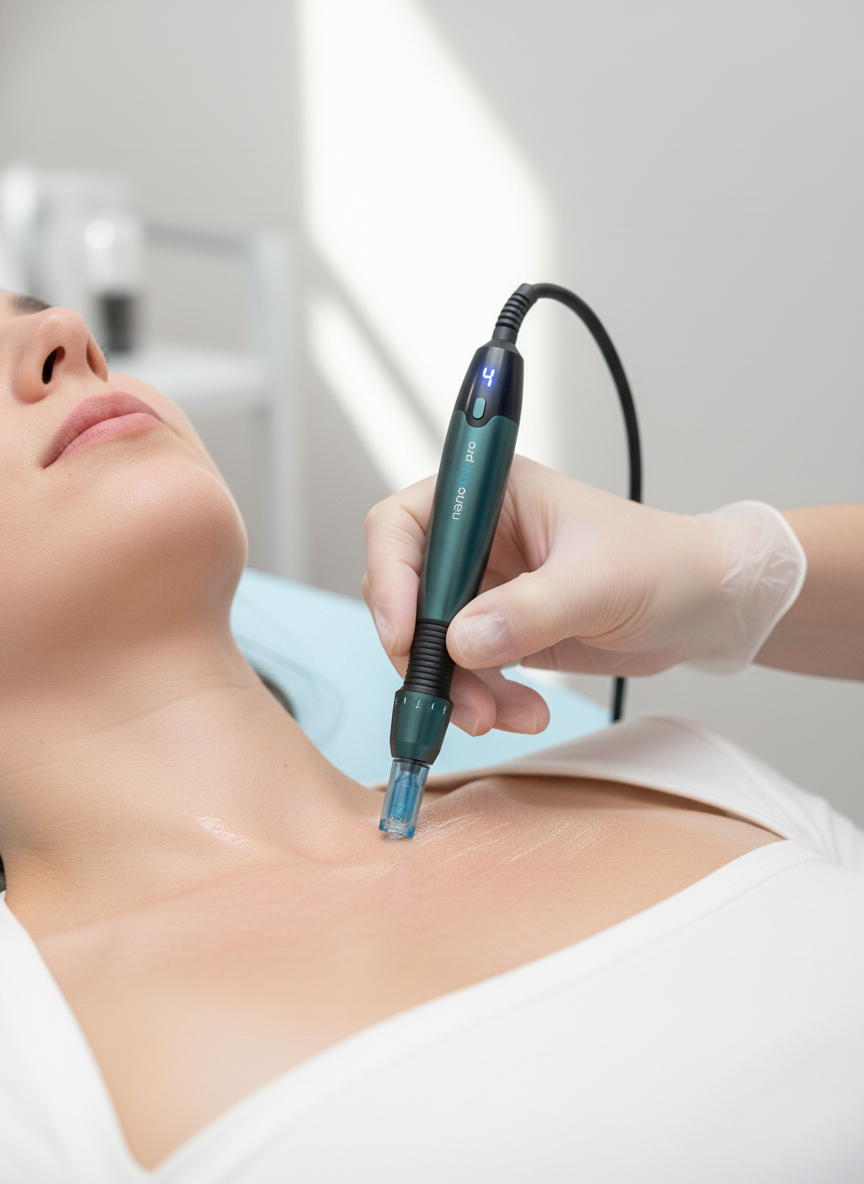
Microneedling Device
Microneedling—also known as collagen induction therapy—is a minimally invasive procedure that uses rows of ultrafine needles to create controlled micro-injuries in the skin. These microchannels activate the body’s natural wound-healing process, stimulating collagen and elastin production and promoting the formation of new skin cells. The result is a smoother texture, improved tone, and a visible reduction in scars, fine lines, pigment irregularities, and signs of aging.
Key Takeaways
- Stimulates collagen remodeling: Microneedling activates fibroblasts to produce collagen and elastin, improving skin thickness, firmness, and texture.
- Creates microchannels for enhanced absorption: Topicals such as growth factors, exosomes, peptides, or antioxidants penetrate more deeply and work more effectively.
- Effective for multiple skin concerns: Acne scars, fine lines, wrinkles, pigmentation, stretch marks, and uneven tone all respond well to treatment.
- Minimal downtime: Redness typically subsides within 24–48 hours, making it an attractive alternative to lasers and deep chemical peels.
- Safe for all skin tones: Unlike lasers, microneedling carries minimal risk of hyperpigmentation, making it suitable for darker Fitzpatrick types.
- Adjustable needle depth: Enabling precise control over treatment depth empowers clinicians to tailor procedures, enhancing their confidence and patient satisfaction.
- Affordable and versatile: Offering strong results at a lower cost and risk encourages clinicians to feel optimistic about expanding treatment options for diverse patient needs.
Popularity and Use in Dermatology
- High demand for non-invasive rejuvenation: Patients prefer treatments that deliver results without extended downtime or trauma to the skin.
- Versatile across age groups: Younger patients seek texture correction and scar reduction, while older patients use microneedling to improve wrinkles and laxity.
- Safe alternative to aggressive resurfacing: Microneedling avoids heat damage, reducing the risk of post-inflammatory pigmentation.
- Widespread clinical adoption: Its efficacy, low risk, and compatibility with topicals have made it a standard aesthetic offering in dermatology, plastic surgery, and med spas.
What to Look for in a High-Quality Microneedling Device
- FDA-clearance for safety and compliance: Ensures the device meets medical standards and allows clinicians to combine treatment with FDA-cleared topicals such as exosomes or peptides.
- Adjustable needle depth: Enables targeted treatment for superficial issues (0.25–0.5 mm) or deeper scars and wrinkles (1.0–2.5 mm).
- Medical-grade needle construction: Stainless steel or titanium needles reduce trauma and increase precision.
- Multiple speed settings: Provides greater control and patient comfort across sensitive and resilient skin zones.
- Interchangeable needle cartridges: Ensures single-use, sterile treatment and allows adaptation to different treatment areas.
- Ergonomic, motorized design: Improves accuracy, consistency, and overall treatment outcomes.
Science Behind Microneedling
- Creation of microchannels: The fine needles penetrate the epidermis and superficial dermis, forming controlled micro-injuries that trigger the wound-healing cascade.
- Activation of fibroblasts: These micro-injuries stimulate fibroblasts to produce new collagen (Type I and III) and elastin, which strengthen the skin.
- Improved product penetration: Microchannels remain open for several minutes, allowing therapeutic serums to reach deeper layers.
- Epidermal regeneration: As new keratinocytes form, the skin becomes smoother, more uniform, and more radiant.
- Enhanced dermal density: Repeated sessions lead to thicker, stronger tissue that supports long-term rejuvenation.
Healing Stages After Microneedling
- Inflammation (Immediate–48 hours):
Mild redness and swelling occur as the body increases blood flow and immune activity to begin repair. - Proliferation (Days 3–7):
Fibroblasts generate collagen and elastin, while new skin cells replace damaged ones. - Maturation (Weeks–Months):
Collagen reorganizes and strengthens, improving texture, tone, elasticity, and overall skin appearance.
Gradual improvement continues for several months as collagen remodels and the skin becomes firmer.
Historical Development
- Initial use in the 1990s:
The earliest microneedling rollers were designed to treat acne scars by stimulating dermal collagen production. - Advancements in technology:
Manual rollers evolved into motorized pens with adjustable needle depth, improving safety and precision. - Adoption in aesthetics:
As demand grew for minimally invasive rejuvenation, microneedling became a staple treatment for pigmentation, wrinkles, scars, and overall skin aging.
Latest Research Evidence
- 2021 JCAD Study:
Demonstrated microneedling’s effectiveness in treating stretch marks and hypertrophic scars through increased collagen remodeling. - 2022 Journal of Cosmetic Dermatology Study:
Showed significant wrinkle reduction and skin rejuvenation using microneedling pens with controlled depth. - 2020 Aesthetic Surgery Journal Comparative Study:
Found that microneedling produced results comparable to CO₂ laser resurfacing for acne scars, with significantly less downtime.
Mechanisms of Action
- Dermal micro-injury stimulation:
Controlled microchannels activate the body’s repair sequence without damaging surrounding tissue. - Increased collagen deposition:
Fibroblasts generate new collagen fibers that plump the skin and soften lines and scars. - Enhanced serum absorption:
Growth factors, vitamin C, hyaluronic acid, and exosomes penetrate deeper, amplifying treatment benefits. - Skin remodeling:
Reorganized collagen fibers improve elasticity, thickness, and smoothness. - Strengthening of the extracellular matrix:
Leads to long-term improvements in texture, firmness, and overall skin quality.
Clinical Benefits & Outcomes
- Scar reduction:
Acne scars, surgical scars, and stretch marks respond well due to collagen remodeling and dermal thickening. - Fine lines and wrinkle improvement:
Increased collagen reduces superficial and intermediate wrinkles, giving skin a smoother appearance. - Pigmentation correction:
Microneedling helps lighten dark spots, melasma, and sun damage by accelerating skin turnover. - Texture and tone enhancement:
Creates tighter, more even skin with refined pores and improved brightness. - Skin tightening effect:
Repeated treatments enhance dermal density and firmness. - Long-lasting improvements:
Collagen formation continues for months, delivering ongoing enhancement.
Microneedling vs. Other Aesthetic Treatments
- Compared to chemical peels:
Peels exfoliate with acids, while microneedling stimulates deeper collagen repairs with less risk of pigmentation. - Compared to laser resurfacing:
Lasers use heat and carry downtime; microneedling avoids thermal injury and is safer for darker skin tones. - Compared to RF microneedling:
Traditional microneedling focuses on mechanical stimulation; RF adds heat for deeper tightening—each has different indications.
Microneedling is often chosen by patients seeking natural results, minimal downtime, and affordability.
Selecting the Right Microneedling Device
- FDA clearance: Ensures safety and validation of claims.
- Adjustable needle depth: Essential for treating scars vs. fine lines.
- Cost-effective needle cartridges: Important for practice profitability.
- Ergonomic, motorized delivery: Ensures comfort and consistent microchannel formation.
- Stable motor output: Reduces trauma and improves precision.
Clinicians benefit most from devices that offer reliability, customizable settings, and consistent penetration accuracy.
Case Studies
Real-World Example
A patient with sun damage and early fine lines undergoes microneedling combined with hyaluronic acid serum. The microchannels allow deeper absorption, while collagen remodeling smooths texture and improves tone over several sessions. The patient experiences tighter, brighter skin with minimal downtime.
Acne Scar…
Patient Profile Treatment Approach Sarah underwent a microneedling session enhanced with Ascellos™ exosomes and a serum containing growth factors and…
Hyperpigmentation Correction…
Patient Profile Treatment Approach Mark received a full-face microneedling session followed by an immediate application of a high-potency vitamin C…
Skin Rejuvenation…
Patient Profile Treatment Approach Emily underwent a microneedling session using a professional-grade device that created uniform microchannels across the face.…